



"Building And Energy 3" 08÷09-09-1999 Herl'any - Czech Republik
Mgr inż. Małgorzata Fedorczak - Cisak, Cracow University of Technology
Mgr inż. Maciej Konarski, " EGOTERM"
The rationalization of energy consumption in buildings needs estimation of present object conditions, the most efficient methods charactarization and also the ways to improve this condition. The observation and conclusions from five energy audits of individual houses are discribed in this paper. These conclusions concern to efficient preparation of energy saving thermorenovation investments. The efficient investment analysis was done on the basis of profits comparison (exploitation savings) and costs resulting from project realization (capital expenditure, repayment, expenditure credit). The special emphasis was put on the interdisciplinary problems in thermomodernization works.
On the verge of new millenium the world needs for keeping the pace of its progress more and more energy which could be supplied in various form. The first alarming information about running out the energy resources appeared on the Economic Committee conference which took place in Canada in 1977. The report presented during this conference announced that the global energy consumption had increased three times in the previous 25 years and people had used in that time as many energy as the whole mankind from the beginning of their existence [1].
The present energy consumption and methods of its decreasing become more and more interesting problem for many people and institutions. Energy consumers are the most interested group as after the increase in energy costs the payment for the thermal energy becomes the significant expense in the family budget. The relationship between the energy prices and the building material and labour costs starts to be favoruable from the point of view of profitability of the energy saving investments. Also the state, by carring out the active policy of saving and rationalization energy consumption in national economy, helps in the investments aiming at decreasing energy consumption.
The energy audit can be described as a special kind of experting. This special character lies in the rationalization of energy consumption as its constant aim, in the economic
efficiency as its constant estimation criterion and in the interdisciplinary of considering problems.
These problems refer both to the conditions of the object and to the process of its exploitation in the technical, economic, legal, organizational scale. They should also take into account user’s behaviours [2].
The important audit element is the choice of the optimum variant of thermomodernization undertaking, in which the economic efficiency criteria are the crucial parts of the problem.
Taking into account all the criteria from the owner point of view the Net Present Value (NPV) is recommended to choose. But because the state leads the saving and rationalization policy of energy consumption in national economy and it intends for this purpose limited financial sources, so the investmens giving as big energy savings from each zloty as possible should be prefered. In the economic analysis it is expressed by high Net Present Value Rate (NPVR) and high value of Internal Rate of Return (IRR). The choice of optimum variant depends on the interest of different units so it can be depended on several - sometimes contradictory - criteria.
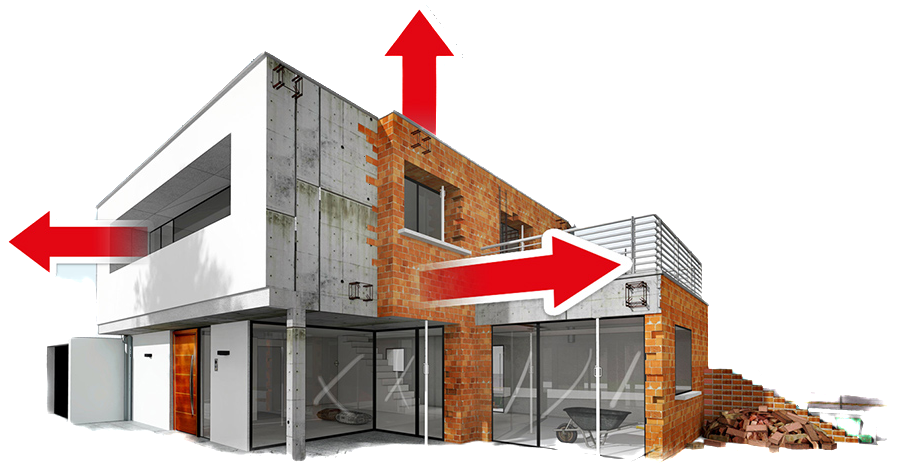
The energy savings in the building subjected to thermomodernization are possible to obtain only in the case when all actions towards the reduction of energy losing by the building and the reduction of energy amount delivered to the building will be coordinated. All the works should also served for assurance of the proper thermal comfort in the compartments and for the environment protection.
Thermomodernization works are conducted not only in order to repair defects of excisting buildings (e.g. removing technological defects and leaks of building walls, hydraulic regulation of heating system, installing regulation and measure equipment), but also to obtain the high insulation parameters of the building walls and change excisting heating and ventilation systems for improving their efficiency. Fragmentary thermomodernization works like post insulation of buildings without any heating system modernization do not give intended economic benefits. But very often only effective post insulation is conducted in the first order, whereas indoors installation adaptation, providing measure and automatic equipment to heating source or thermal centre is realized only in several buildings. Meanwhile the thermomodernization efficiency can by achieved only by complexity of all works which include not only the building but also indoors systems, heating sources and the whole systems supplying the building with the heat. Unfortunately this problem is underestimated by investors and contractors who limit the range of thermorenovation works. In this way the results of the works are incomplete because they do not decrease the value of demand thermal energy index for heating 1m2 of usable floor area [E] but only improve temperature conditions in the rooms and remove effects of the frost penetration in the walls.
The results of complex energy saving works show that the most efficient are works connected with the indoors system modernization. The effects in decreasing of energy consumption or heating costs depend more on the extent of system modernization than on the thermoinsulation standards of the building walls. Therefore the order of works conducted in the building should not be accidental and particular elements of thermomodernization works should be arranged according to their economic efficiency.
In some buildings we can very often find the system which is out of heating and hydraulic adjustment. It is mostly caused by solid deposits inside the pipes and the heaters, but the general technical state is good enough, so this central heating system is not classified to exchange for the new one. In this case the best economic solution is adaptation of the excisting system to new conditions, which are the results of post-insulation of the building. The cost of such works is about 20 - 30 % of the cost of changing the whole heating system [3].
The thermal and hydraulic adaptation of the excisting system needs working out a preliminary regulation design. This preliminary regulation of the central heating relies on the thermal power adaptation of the individual radiators to calculated heat demand of the room. The proper preliminary regulation is an essential element of good work of the central heating system. The opinions that all problems connecting with exploitation could be solved only by the thermostatic valve are completely incorrect.
It is relatively easy to decrease of energy consumption in new buildings by using proper improvements of external walls and application of needed materials. However this fact does not give energy savings as new buildings will be a decided minority in all heating cubature by many years. By the end of this century only about 30 % of the rooms will have been built after 1975.
Improving thermal insulation and tightness of the external wall are only parts of the modernization works. However it should be remembered that post-insulation of external walls gives profits not only in decreasing of heating demand but also in removal of the technological defects and thermal bridges. It protects the construction against the destruction (e.g. corrosion) and prevents the external walls from the steam condensation and the frost penetration.
The architectonic and material solutions and climatic zone heat losses by the windows are estimated as 15 - 25 % of all losses in the general heat balance. Some amount of solar energy comes by the window. For example the total insolation amount in December in Warsaw is 19 kW·h/m2 area versed in South [4], and heating profits from the solar radiaton are about 9% of total heat losses of building.
The windows leakage have a large influance on the amount of heat losses and thus on the heating costs. In Poland there are now a lot of new windows constructions by using which the costs of losing thermal energy could be limited by about 55 % in comparison with windows with U=2,6 W/m2·K ratio and by about 80 % in comparison with U=5,1 W/m2·K ratio [5].
Five individual buildings are chosen for the presentation. All characteristic of these buildings before and after thermomodernization are shown in the table T-1
Building 1 |
Building 2 |
Building 3 |
Building 4 |
Building 5 |
|||||||||||
construction year: |
1978-83 |
1925 |
1958 |
1964 |
1975 |
||||||||||
technology : |
traditional |
traditional |
traditional |
traditional |
traditional |
||||||||||
kind of fuel for heating : |
natural gas |
natural gas |
natural gas |
natural gas |
natural gas |
||||||||||
heating cubature [m3] : |
537 |
373 |
607 |
724 |
907 |
||||||||||
heating area [m2] : |
129,9 |
149,7 |
160,1 |
187,2 |
283,5 |
||||||||||
Number of the variants : |
10 |
9 |
11 |
10 |
8 |
||||||||||
Details to most profitable variant |
|||||||||||||||
capital expenditure [euro] |
700,3 |
4026,5 |
6660,2 |
4420,3 |
5537,2 |
||||||||||
SPBT [lat] |
5,0 |
5,8 |
4,6 |
6,8 |
8,3 |
||||||||||
NPV [euro] |
676,9 |
2711,4 |
7588,3 |
1931,5 |
986,6 |
||||||||||
IRR [%] |
21 |
17 |
23 |
14 |
11 |
||||||||||
euro/ ?GJ |
29,4 |
34,5 |
27,0 |
40,18 |
49,0 |
||||||||||
Value to calculate before and after thermorenovation |
|||||||||||||||
bef. |
after |
bef. |
after |
bef. |
after |
bef. |
after |
bef. |
after |
||||||
average demand for the heat: E0 [kW·h/(m2year)] |
289,3 |
261,5 |
1084 |
532,9 |
433,6 |
150,0 |
275,0 |
181,5 |
584,2 |
339,0 |
|||||
top demand for heating power [kW] |
22 |
20,2 |
26,2 |
13,9 |
36,7 |
14,1 |
28,3 |
20,0 |
29,7 |
17,9 |
|||||
Table T-1 Building characteristic before and after the thermorenovation
Buil- ding |
Variant number |
Savings |
Economic efficiency index |
||||||
energy |
total |
SPBT |
NPV |
IRR |
euro/GJ |
||||
GJ /a |
% |
euro /a |
% |
years |
euro |
% |
euro |
||
1 |
w1 |
7,0 |
3,8 |
41,5 |
3,8 |
4,9 |
202,3 |
21,4 |
28,8 |
w2 (polystyrene 10 cm) |
56,2 |
30,8 |
332,4 |
30,3 |
12,7 |
-963,4 |
4,2 |
74,9 |
|
w3 ( 20 cm) |
18,0 |
9,6 |
103,7 |
9,5 |
4,8 |
513,4 |
21,7 |
28,6 |
|
w4 ( 8 cm) |
1,4 |
0,7 |
8,1 |
0,7 |
18,3 |
-68,8 |
-0,5 |
108,6 |
|
w5 (windows U =1.6) |
17,4 |
9,6 |
103,2 |
9,4 |
24,9 |
-1561,0 |
-3,9 |
147,4 |
|
w7 (w1, w3) |
23,9 |
13,1 |
130,7 |
12,9 |
5,0 |
676,9 |
21,0 |
29,3 |
|
2 |
w2 (polystyrene 12 cm) |
47,0 |
20,7 |
280,6 |
20,4 |
9,2 |
163,7 |
9,0 |
54,2 |
w3 ( 20 cm) |
12,7 |
5,6 |
75,4 |
5,5 |
1,4 |
631,5 |
75,8 |
8,1 |
|
w4 ( 10 cm) |
11,5 |
5,0 |
67,8 |
4,9 |
5,9 |
263,5 |
17,2 |
34,6 |
|
w5 (windows U =1.6) |
5,0 |
2,2 |
29,8 |
2,2 |
54,7 |
-1339,5 |
-11,3 |
323,6 |
|
w6 ( 20 cm) |
48,1 |
21,0 |
284,5 |
20,7 |
3,6 |
1766,5 |
29,9 |
20,9 |
|
w7 (w2, w3, w4, w6) |
116,7 |
50,9 |
637,6 |
50,2 |
5,8 |
2711,4 |
17,0 |
34,5 |
|
3 |
w1 |
35,0 |
9,7 |
206,4 |
9,6 |
0,6 |
1885,8 |
166,0 |
3,7 |
w2 (polystyrene 12 cm) |
48,7 |
13,6 |
288,2 |
13,5 |
7,4 |
687,4 |
12,7 |
43,7 |
|
w3 ( 25 cm) |
96,3 |
26,8 |
569,6 |
26,6 |
3,0 |
3865,9 |
35,8 |
17,6 |
|
w5 (windows U =1.1) |
8,6 |
2,4 |
50,7 |
2,4 |
26,5 |
-852,4 |
-4,6 |
156,9 |
|
w7 (w1, w2, w3, w4) |
246,8 |
68,8 |
1437,6 |
68,2 |
4,6 |
7588,3 |
23,0 |
26,9 |
|
4 |
w1 |
30,4 |
11,5 |
179,8 |
11,4 |
1,7 |
1443,4 |
60,8 |
10,2 |
w2 (polystyrene 12 cm) |
70,0 |
26,5 |
414,1 |
26,2 |
7,9 |
770,6 |
11,5 |
46,6 |
|
w3 ( 15 cm) |
19,0 |
7,2 |
113,2 |
7,2 |
18,4 |
-980,0 |
-0,6 |
109,1 |
|
w4 ( 10 cm) |
20,2 |
7,6 |
119,6 |
7,6 |
7,0 |
328,2 |
13,6 |
41,5 |
|
w5 (windows U =1.1) |
5,1 |
1,9 |
30,3 |
1,9 |
33,5 |
-715,9 |
-6,9 |
198,2 |
|
w7 (w1, w2, w4) |
120,6 |
41,6 |
650,8 |
41,2 |
6,8 |
1931,5 |
14,0 |
40,2 |
|
5 |
w2 (polystyrene 12 cm) |
93,2 |
34,6 |
551,5 |
34,3 |
9,1 |
350,2 |
9,1 |
53,9 |
w3 ( 10 cm) |
20,0 |
7,5 |
118,8 |
7,4 |
4,3 |
654,7 |
24,8 |
25,1 |
|
w5 (windows U=1.6) |
11,1 |
4,1 |
65,4 |
4,1 |
49,3 |
-2593,0 |
-10,5 |
291,9 |
|
w7 (w2, w3) |
113,2 |
42,0 |
668,4 |
41,5 |
8,3 |
986,6 |
10,7 |
49,0 |
|
Table T-2 Energy and power savings and economic efficiency index for analysed buildings.
In the case of all analyzed building the following modernization variants were examined
variant 1 - heating system - central heating modernization
variant 2 - post-insulation of external walls
variant 3 - post-insulation of flat-roof
variant 4 - post-insulation of the floor over the cellar
variant 5 - windows change
variant 6 - post-insulation of the roof
variant 7 - the most profitably
Building 1
In this case the optimum variant is modernization of central heating system (hydraulic regulation, using weather automatics, thermostatic valve fitting) and post-insulation of flat-roof with the foamed polystyrene with thickness of 20 cm.
Building 2
Economic analysis show that the most efficient variant is post-insulation of the flat-roof with the foamed polystyrene with thickness of 20 cm , post-insulation over the cellar with the foamed polystyrene with thickness of 10 cm, post-insulation of the walls of outbuilding with the foamed polystyrene with thickness of 12 cm, and post-insulation of the roof with the foamed polystyrene with thickness of 12 cm.
Building 3
Recommendation as above and additionally post-insulation of the walls of outbuilding with the foamed polystyrene with thickness of 12 cm, post-insulation of the flat-roof with the foamed polystyrene with thickness of 25 cm , post-insulation over the cellar with the foamed polystyrene with thickness of 10 cm, on the heating side modernization central heating system (hydraulic regulation).
Building 4
The most effective modernization variant is the complex work : on the heating side changing the central heating boiler, the thermostatic valve fitting and using the weather automatics ; on the building side : complex post-insulation of all external walls with the foamed polystyrene with thickness of 12 cm and warming the floor over the cellar with 10 cm foamed polystyrene.
Building 5
In this case the optimum variant is post-insulation of flat-roof with 10 cm foamed polystyrene and additionally post-insulation of all external walls with 12 cm foamed polystyrene.
Additional works needed low capital input were recommended:
placing the thermal screen made from the foamed polystyrene covered by aluminium foil between the radiator and the external wall. This screen reflets thermal radiation and limits the penetration heat losses.
tightening the windows and doors woodworks by means of plastics gaskets
attention should be paid for proper temperature adjustment on the thermostatic valves near the radiators.
Fig. W-1 Comparison of investment outlay, savings and SPBT for the most profitably variant for each building
There is a high potential of energy which is possible to save in individual housing. In analyzed audits the energy savings are on average about 40 %.
According to the researches the best results are received by the complex solutions.
According to the previous expectations the window changing is not profitable. The cheaper methods of window woodworks modernization e.g. foil or the third window panel were not taken into consideration
The following factors decide about efficiency of thermomodernization works : technical state of the building (e.g. while repairing facade of the building the additional insulation can be taken into account) ; thermal insulating power of external walls ( the higher is U index the more profitable is using the additional thermal insulation ) ; readjustment the heating system to lower heat demand after the thermorenovation.
The proper behaviour of inhabitants is also very important e.g. not covering the radiators with the curtains, short and intense air ventilation instead of long-lasting cooling down of the rooms, turning off the thermostats during the absence of the inhabitants.
The success of all thermomodernization works will lead during the next years not only to gaining considerable energetic and economic effects but also to the improvement of natural environment state. It is also an indispensable condition for the further economic development to envisage a decrease of energy resources.
1. W. Płoński, L.Laskowski "Oszczędne gospodarowanie energią w budownictwie mieszkaniowym i towarzyszącym." Problematyka budownictwa - 193. W-wa 1984
2. M. Robakiewicz "Jak zmniejszyć koszty ogrzewania budynków" Fundacja Poszanowania Energii W-wa 1998.
3. R. Rabiasz "Cieplej i taniej" Tygodnik Budowlany 14/98
4. PN-B-02025 (zgodnie z CEN/TC 89 "Thermal behaviour of buildings and building components")
5. P. Lis "Ekonomiczne i ekologiczne efekty ograniczania strat ciepła przez okna" Przegląd Budowlany 10/94